Mission
To provide botanical education, garden design, and consulting services
that increase awareness and action to sustain native plants and pollinators.
Upcoming Events:
Native Plant Trust
Gardening for Pollinators This online course (open April 24-August 14, 2026) teaches how to convert a yard into productive pollinator habitat. Learn about issues associated with pollinator decline and current conservation efforts, then explore a variety of pollinators and the native plants that support their life cycles. The course also covers basic pollinator garden design and provides step-by-step instructions for selecting plants and installing and maintaining these habitats. You can complete the course at your own pace. It typically takes at least 12 hours to complete.
Spring Residential Landscape Study April 11, 2026 1-3pm on-site workshop
Join us in our home habitat to see what "spring clean-up" looks like when managing your garden for wildlife. We will discuss timing and techniques for managing last year's dead plants as many provide nesting sites for our native bees. We will cover topics as mulching, and observe how insects and other animals use various landscape features through their lifecycle.
Plant's Scents and Sensibilities June 23, 2026 7-8pm online webinar
Why do flowers have distinct scents, and why do plants produce smells in the first place? This program explores these questions by examining how plants communicate and protect themselves. We’ll also investigate the remarkable ways plants perceive their surroundings—sensing, responding, and moving in ways that are largely invisible to humans.
Getting to Know Pollinators July 21, 2026 6-7pm online webinar
Learn about native insect pollinators you can observe in your own garden. Some fascinating specialized relationships between insect pollinators and plants here in the Northeast will be highlighted. You will leave knowing how to support insects throughout their life cycle with your garden practices.
Designing a School Pollinator Garden August 4, 2026 10-11am online webinar
This educator-focused webinar will walk you through the steps to planning, designing, and planting a native plant pollinator garden at your school.
Native Plant Trust
Gardening for Pollinators This online course (open April 24-August 14, 2026) teaches how to convert a yard into productive pollinator habitat. Learn about issues associated with pollinator decline and current conservation efforts, then explore a variety of pollinators and the native plants that support their life cycles. The course also covers basic pollinator garden design and provides step-by-step instructions for selecting plants and installing and maintaining these habitats. You can complete the course at your own pace. It typically takes at least 12 hours to complete.
Spring Residential Landscape Study April 11, 2026 1-3pm on-site workshop
Join us in our home habitat to see what "spring clean-up" looks like when managing your garden for wildlife. We will discuss timing and techniques for managing last year's dead plants as many provide nesting sites for our native bees. We will cover topics as mulching, and observe how insects and other animals use various landscape features through their lifecycle.
Plant's Scents and Sensibilities June 23, 2026 7-8pm online webinar
Why do flowers have distinct scents, and why do plants produce smells in the first place? This program explores these questions by examining how plants communicate and protect themselves. We’ll also investigate the remarkable ways plants perceive their surroundings—sensing, responding, and moving in ways that are largely invisible to humans.
Getting to Know Pollinators July 21, 2026 6-7pm online webinar
Learn about native insect pollinators you can observe in your own garden. Some fascinating specialized relationships between insect pollinators and plants here in the Northeast will be highlighted. You will leave knowing how to support insects throughout their life cycle with your garden practices.
Designing a School Pollinator Garden August 4, 2026 10-11am online webinar
This educator-focused webinar will walk you through the steps to planning, designing, and planting a native plant pollinator garden at your school.
Habitat Garden Design and ConsultingI consult with homeowners on how to maintain yards in an ecologically productive way. By using habitat-oriented garden practices, we can make yards of any size enjoyable and beautiful for families, while also supporting birds, insects, and native plants. Specifically, I work with homeowners of all skill levels to envision what their yard could be and help them through the process of making it happen. |
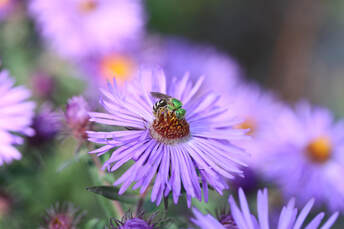
Botanic and Garden TalksI provide talks, workshops, and webinars on creating gardens to support native plants and pollinators. I blend botanical science with practical application to help explain the fascinating and unique relationships between plants and other ecosystem components. |
Resources
|
"The knowledge that refuge is available, when and if needed, makes the silent inferno of the desert more easily bearable. Mountains complement desert as desert complements city, as wilderness complements and completes civilization."--Edward Abbey, Desert Solitaire (1968)
|
Of the 3,514 plant species occurring in New England, 31% are not native, and 22% of our native plants are rare (threatened). A high percentage of our declining species require insect pollination. (Native Plant Trust) |
|
Showy lady's-slipper orchid (Cypripedium reginae)
|